



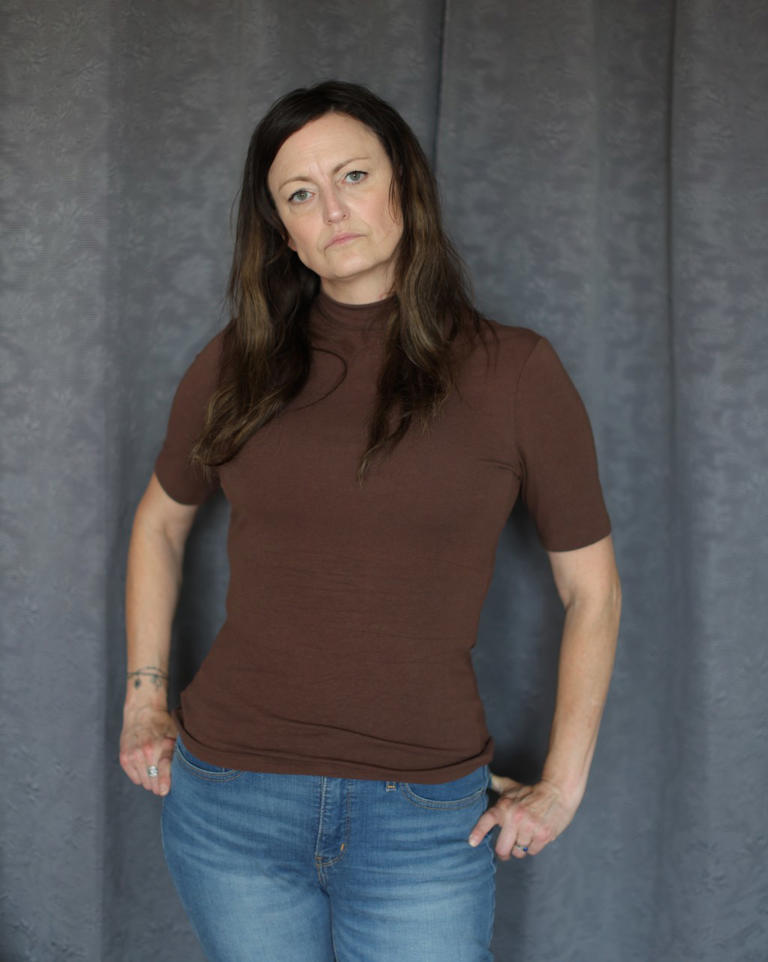
She hasn’t been outside since January. On Monday, Claire Brosseau made an exception, standing before the Ontario Superior Court of Justice in Toronto to plead for the right to die.
The 49-year-old former actress, whose credits include projects with James Franco and Daniel Stern, filed an emergency motion requesting a constitutional exemption to receive medically assisted suicide. Her sole underlying condition: severe bipolar disorder and PTSD, which she describes as causing “unrelenting suffering”.
“Every morning I wake up I don’t think I’m going to make it through the day,” Claire Brosseau told reporters outside the courthouse.
Canada’s Medical Assistance in Dying (MAID) legislation allows eligible adults with grievous and irremediable medical conditions to end their lives with medical help. But there is a critical exclusion: people whose only underlying condition is mental illness cannot currently access MAID.
That exclusion is scheduled to expire in March 2027, nearly a year away. The federal government has already delayed the expansion twice, citing concerns from medical professionals about the lack of consensus on when a mental illness can be considered “irremediable”.
Brosseau says she cannot wait that long. “Every month of delay is another month of suffering that I am told I must simply endure,” she said.
This marks the first time someone in Canada with a mental disorder has requested an exemption to MAID legislation . Brosseau’s lawyer, Michael Fenrick, filed the motion as an urgent request under an ongoing constitutional challenge first launched in 2024.
“This is an extraordinary remedy which we are pursuing, but the situation that Claire finds herself in is also extraordinary,” Fenrick said.
Brosseau has written about wanting to die since age eight. She has tried over two dozen medications, multiple therapies, and electroconvulsive therapy, with little relief. Her family has complex feelings. Her mother told the New York Times: “No mother ever wants to lose a child before them, but no mother wants to see incredible suffering”.
Even Brosseau’s own psychiatrists disagree. One believes she can still recover; the other supports her choice while hoping she changes her mind.
A judge could hear the emergency motion before summer. Until then, Brosseau waits, inside her home, rarely speaking to anyone, counting the months until March 2027.