



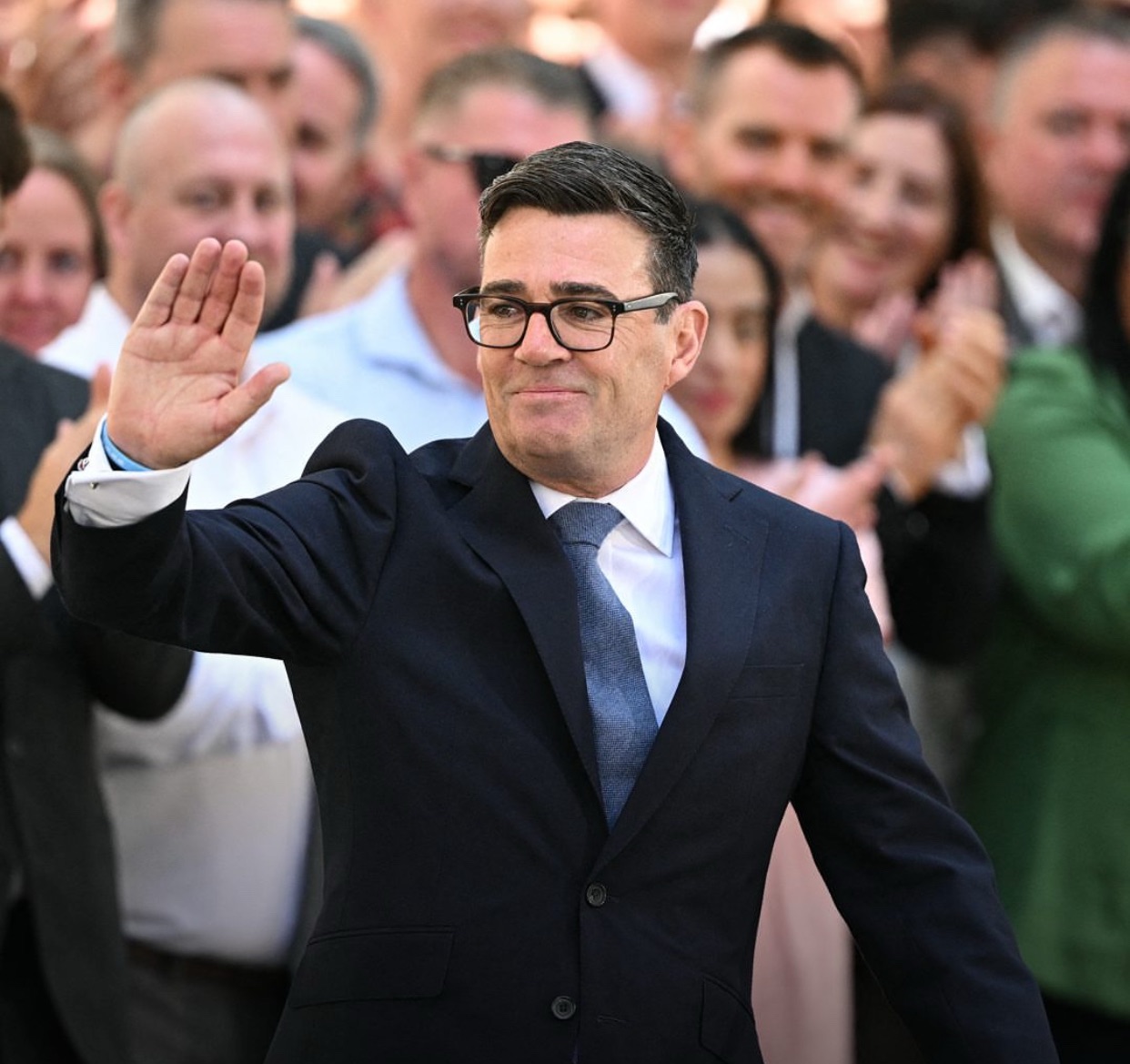
The political landscape of the United Kingdom has undergone a massive structural shift as Andy Burnham UK Prime Minister officially took charge of the British government. Following an audience with King Charles III at Buckingham Palace on Monday, July 20, 2026, the newly declared Labour Party leader accepted the monarch’s invitation to form a new administration.
Burnham’s spectacular ascent to the nation’s highest office comes immediately after the formal resignation of Sir Keir Starmer, whose two-year tenure as prime minister concluded following a steep decline in public approval and lingering economic stagnation. Stepping out of the gates of Downing Street, the incoming premier faces a monumental array of domestic and geopolitical challenges, marking a brand-new chapter for the governing Labour Party.
Burnham’s transition to Number 10 marks a legendary political comeback that completely reshapes British governance. Affectionately nicknamed the “King of the North” during his highly visible, nine-year tenure as the Mayor of Greater Manchester, Burnham successfully engineered a return to mainstream national politics by winning a parliamentary by-election in the constituency of Makerfield just last month.
The seasoned veteran is no stranger to the inner workings of Whitehall. He previously managed high-profile cabinet responsibilities under Prime Ministers Tony Blair and Gordon Brown, serving as Secretary of State for Health and Secretary of State for Culture, Media and Sport.
His deep rooted connection to regional governance forms the core foundation of his new national policy. In his introductory addresses, Burnham explicitly vowed to “rewire Britain” by aggressively decentralizing power away from Westminster and placing economic resources directly back into the hands of local communities.
The dramatic leadership handover highlights an era of historic volatility within the modern British political apparatus. Burnham officially assumes office as the United Kingdom’s seventh prime minister in the turbulent decade following the historic 2016 Brexit referendum.
While Starmer successfully led Labour to a landslide general election victory in July 2024, his administration struggled immensely to stimulate tangible economic growth or effectively alleviate the country’s severe cost-of-living squeeze. By executing a rapid internal leadership transition, the Labour majority aims to stabilize the ship, restore dwindling voter confidence, and insulate the party from the mounting electoral threat of right-wing opposition parties before the next general election cycle in 2029.
The honeymoon period for the incoming Prime Minister will be practically nonexistent as financial markets and public services demand immediate intervention. Burnham inherits an incredibly tight fiscal environment characterized by subdued economic expansion, high borrowing costs, and heavily strained public infrastructure.
Political analysts note that his left-of-centre reputation for robust public spending will face strict limitations, forcing his upcoming cabinet to make incredibly tough decisions regarding tax reforms and structural funding. Furthermore, Burnham will face immediate international tests, including navigating diplomatic relations with foreign leaders who have previously criticized his progressive, regional-first approach to governance.