



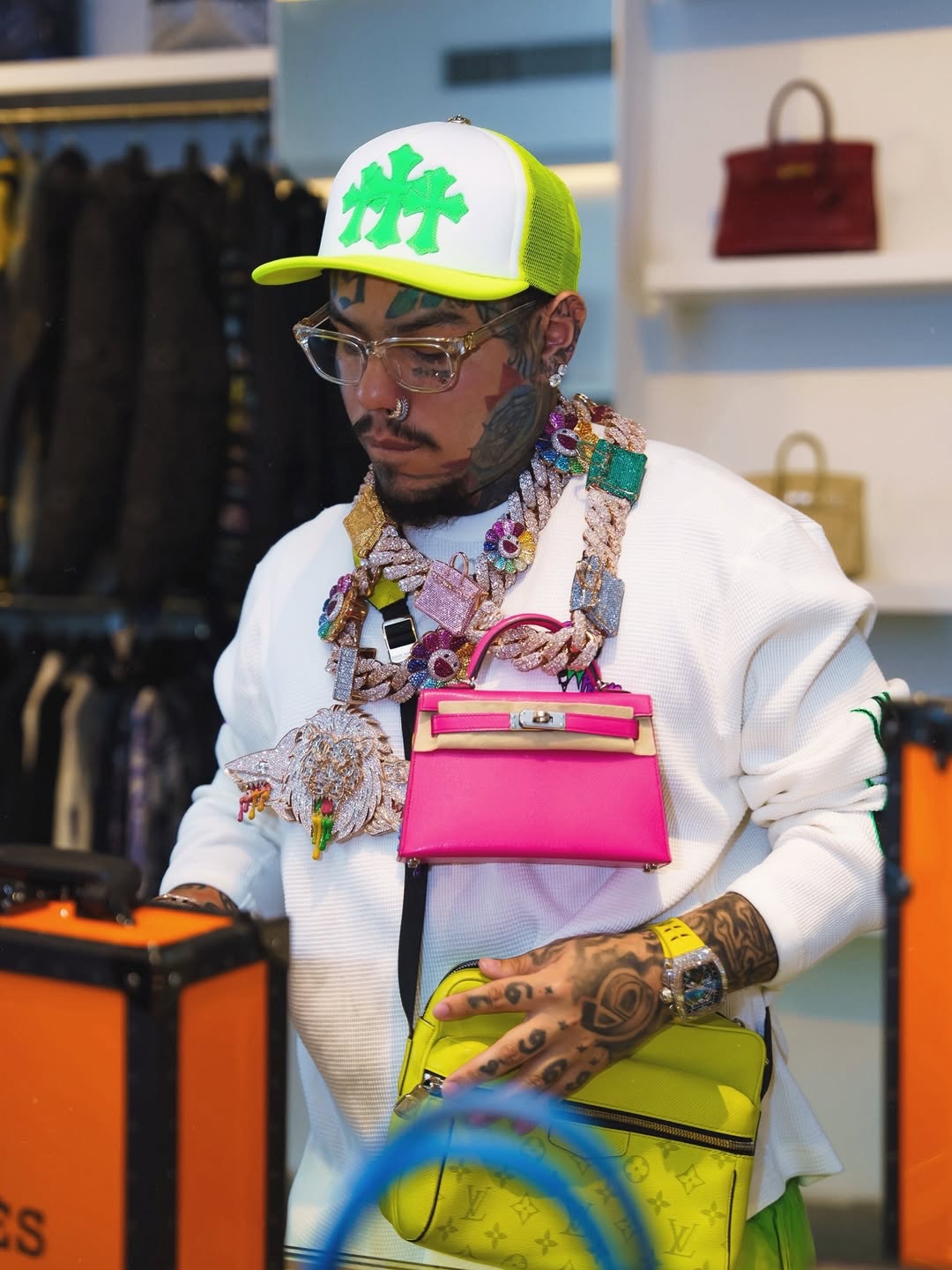
The rainbow-haired rapper turned an interview into an all-out war of words. During a recent episode of Perspektives With Bank, 6ix9ine exploded on host Big Bank, unprompted, about the origins of his industry backlash. The conversation immediately pivoted to the Young Thug snitching allegations, a topic that has dominated hip-hop discourse for months.
When Big Bank asked why the internet remains a “dark place” for the rapper, 6ix9ine flipped the script. He accused Bank of bias, pointing to the host’s previous sit-downs with Young Thug and 21 Savage.
“You interviewed Thug and me and him are no different in the interrogation room,” 6ix9ine said.
It was a direct accusation. The rapper has long argued that the industry holds him to a different standard than artists accused of similar legal cooperation. He then brought up the Young Thug snitching allegations as evidence of a double standard.
Tekashi 6ix9ine, who testified against his former Nine Trey Gangsta Bloods associates in 2019, was blackballed by the hip-hop community. But when Young Thug was released from his YSL RICO case, the reception was markedly different.
“It’s racist to call me a snitch but not 50 Cent, T.I., Snoop, Gunna, and Thug,” 6ix9ine argued in a recent VladTV interview .
The rapper also made a shocking admission during the Big Bank sit-down: he paid the host to be there.
“If people didn’t know, I’m paying you to be here. This is my job,” 6ix9ine said, framing the interview as a transactional business move rather than a friendly chat.
The altercation did not end there. Big Bank fired back, criticizing 6ix9ine for snitching on Black men as a Mexican rapper. Tekashi countered by bringing up the murder of Nipsey Hussle, further escalating the tension.
The debate highlights a fracture in the culture. While 6ix9ine trolls relentlessly, even wearing a dress to mock Young Thug’s Jefferey album cover, he insists the hate comes from a place of racial bias, not moral outrage.
For 6ix9ine, the truth is simple. The Young Thug snitching allegations prove that hip-hop’s loyalty code is flexible. For his critics, he remains a pariah who broke the ultimate rule. But as the rapper told Big Bank before ending the interview: “Let me be me.”